
Managing Pre-Diabetes While Working Full Time
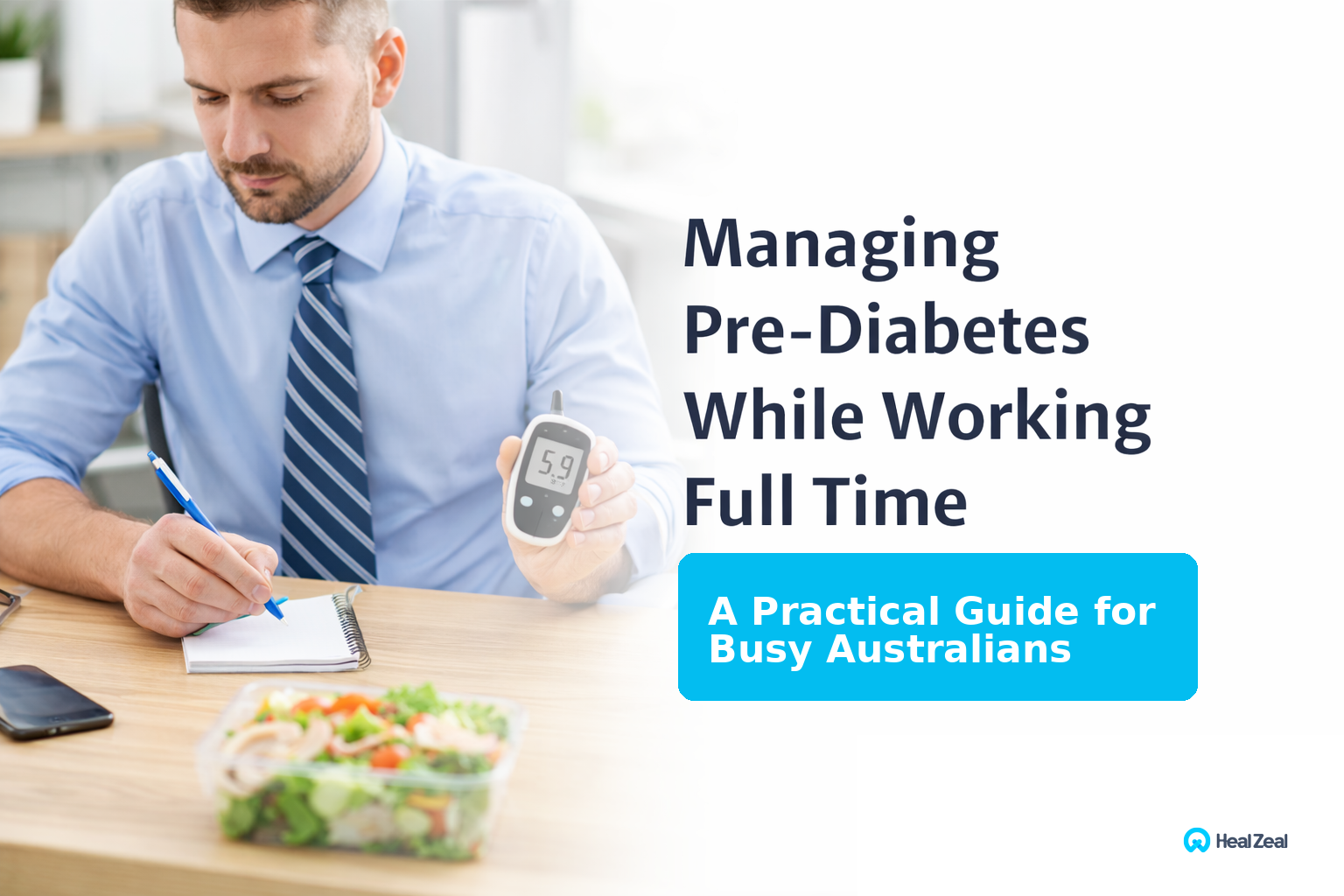
Pre-diabetes is increasingly being detected during routine blood tests across Australia- especially among working adults with long hours, sedentary jobs, stress, and irregular meals. Many people are told their sugar levels are “borderline” and advised to make lifestyle changes- but are rarely given a practical, work-day-friendly plan.
This research-based guide explains how busy Australians can manage pre-diabetes realistically while working full time - using small, high-impact habits that improve blood sugar control and reduce the risk of progression to type 2 diabetes.
If addressed early with structured lifestyle support, pre-diabetes is often reversible.
The 5 Highest-Impact Changes for Busy Workers with Pre-Diabetes
Fix Breakfast - or Structure the First Meal Properly
Research shows refined carbohydrate breakfasts cause sharp glucose spikes and hunger rebounds.
Better first-meal options:
-
Eggs + wholegrain toast
-
Greek yogurt + nuts + seeds
-
Protein smoothie (low sugar)
-
Nut butter + high-fiber toast
-
Leftover protein + vegetables
If not hungry early:
-
Delay breakfast
-
Avoid sweet coffee drinks and biscuits
-
Make first intake protein-based
This reduces morning glucose spikes and mid-morning cravings.
Use the 10-Minute Post-Meal Walk Method
Short walks after meals significantly reduce post-meal glucose spikes — supported by multiple glucose response studies.
Practical workday use:
-
Walk after lunch
-
Walk after dinner
-
Take phone calls while walking
-
Do corridor laps
-
Walk in the car park
Consistency matters more than intensity.
Build a Blood-Sugar-Stable Work Lunch
Typical office lunches are high glycemic load.
Common spike meals:
-
White bread sandwiches
-
Pasta bowls
-
Rice takeaway boxes
-
Bakery foods
Use this plate structure instead:
½ vegetables + ¼ protein + ¼ slow carbs
What Pre-Diabetes Means
Pre-diabetes means blood glucose levels are above normal but not yet in the diabetes range. It may appear as:
-
Borderline HbA1c
-
Impaired fasting glucose
-
Impaired glucose tolerance
Large prevention studies have shown that structured lifestyle intervention — including food pattern changes, weight reduction, movement, and sleep improvement- can reduce diabetes progression risk by up to 40–60%.
The challenge for working adults is not knowledge - it is daily execution.
Why Full-Time Workers Are at Higher Risk
Working Australians commonly face:
-
Long sitting hours
-
Quick high-carb breakfasts
-
Takeaway lunches
-
Stress eating
-
Late dinners
-
Poor sleep
-
No time for long exercise sessions
This combination worsens insulin resistance — the main driver behind pre-diabetes.
The solution is not extreme dieting- it is metabolic timing + food structure + movement breaks.
Examples:
-
Chicken salad + small grain portion
-
Tuna + beans + vegetables
-
Leftover dinner protein + veg
-
High-protein wrap with salad
Eating protein and fiber before carbohydrates slows glucose rise.
Break Sitting Time Every Hour
Research shows prolonged sitting reduces insulin sensitivity - even in people who exercise later.
Minimum target:
-
Move every 45–60 minutes
Simple methods:
-
Standing calls
-
Water refill walks
-
Printer walks
-
Step breaks
-
Walking meetings
Think in terms of “movement snacks.”
Reduce Late-Night Carb Loads
Late high-carb dinners are linked with poorer overnight glucose control.
Better approach:
-
Eat earlier when possible
-
Reduce carb portion at dinner
-
Increase protein and vegetables
-
Walk after dinner
If dinner is late - keep it lighter and lower carb.
Smart Snacks for Long Workdays
Not everyone needs snacks — but long gaps can lead to overeating later.
Better options:
-
Boiled eggs
-
Nuts (small handful)
-
Greek yogurt
-
Roasted chickpeas
-
Cheese + wholegrain crackers
-
Apple + nut butter
Avoid:
-
Sweet muesli bars
-
Fruit juice
-
Office biscuits
-
Sugary coffee drinks
Stress and Pre-Diabetes
Chronic work stress increases cortisol, which raises blood glucose and insulin resistance.
Quick evidence-based regulators:
-
Slow breathing for 3–5 minutes
-
Short outdoor walks
-
Phone-free lunch breaks
-
Work boundary setting
-
Regular sleep timing
Metabolic health is not only about food - stress biology matters.
Sleep Directly Affects Blood Sugar
Sleep restriction alone can worsen glucose control within days.
Targets:
-
7+ hours sleep
-
Regular sleep schedule
-
Screen reduction before bed
-
Avoid heavy late meals
Sleep is a glucose regulation tool.
A Simple Pre-Diabetes Workday Template
Morning
Protein-based first meal
Short walk after eating
Work Hours
Stand hourly
Balanced lunch plate
10-minute walk after lunch
Evening
Earlier lighter dinner
Post-meal walk
Weekly
Strength training 2–3 times
Total movement at least 150 minutes/week
When Professional Pre-Diabetes Support Helps
Structured lifestyle support improves outcomes through:
-
Personal meal planning
-
Label reading education
-
Supermarket guidance
-
Blood sugar response training
-
Habit tracking
-
Accountability
-
Prevention-focused coaching
Early intervention gives the highest reversal chance.
Pre-Diabetes Support and Lifestyle Consultations- HealZeal
If you have been told you have pre-diabetes, borderline sugar, or insulin resistance, structured lifestyle guidance can help you act early and effectively.
You may be eligible for GP Chronic Condition Management Plan (GPCCMP) support — speak with your GP and request a referral for diabetes education and lifestyle management.
For research-based lifestyle and pre-diabetes support articles:
0435 195 786
www.healzeal.com
For appointments and consultations:
www.healzeal.com.au
Ask your GP about a GP Chronic Condition Management Plan (GPCCMP) referral and contact HealZeal for lifestyle and pre-diabetes prevention support - or call us directly on 0435 195 786.